Hail, roof leaks and wind-driven rain
Hail & Storm Water Damage in Frisco, TX
Spring storms in Collin County bring hail the size of golf balls and rain that falls sideways. Call and you are connected with an independent restoration company that serves your area.
- Free to use, no obligation
- Independent local contractors
- Homes, rentals and businesses
The storm passes in twenty minutes. The water stays.
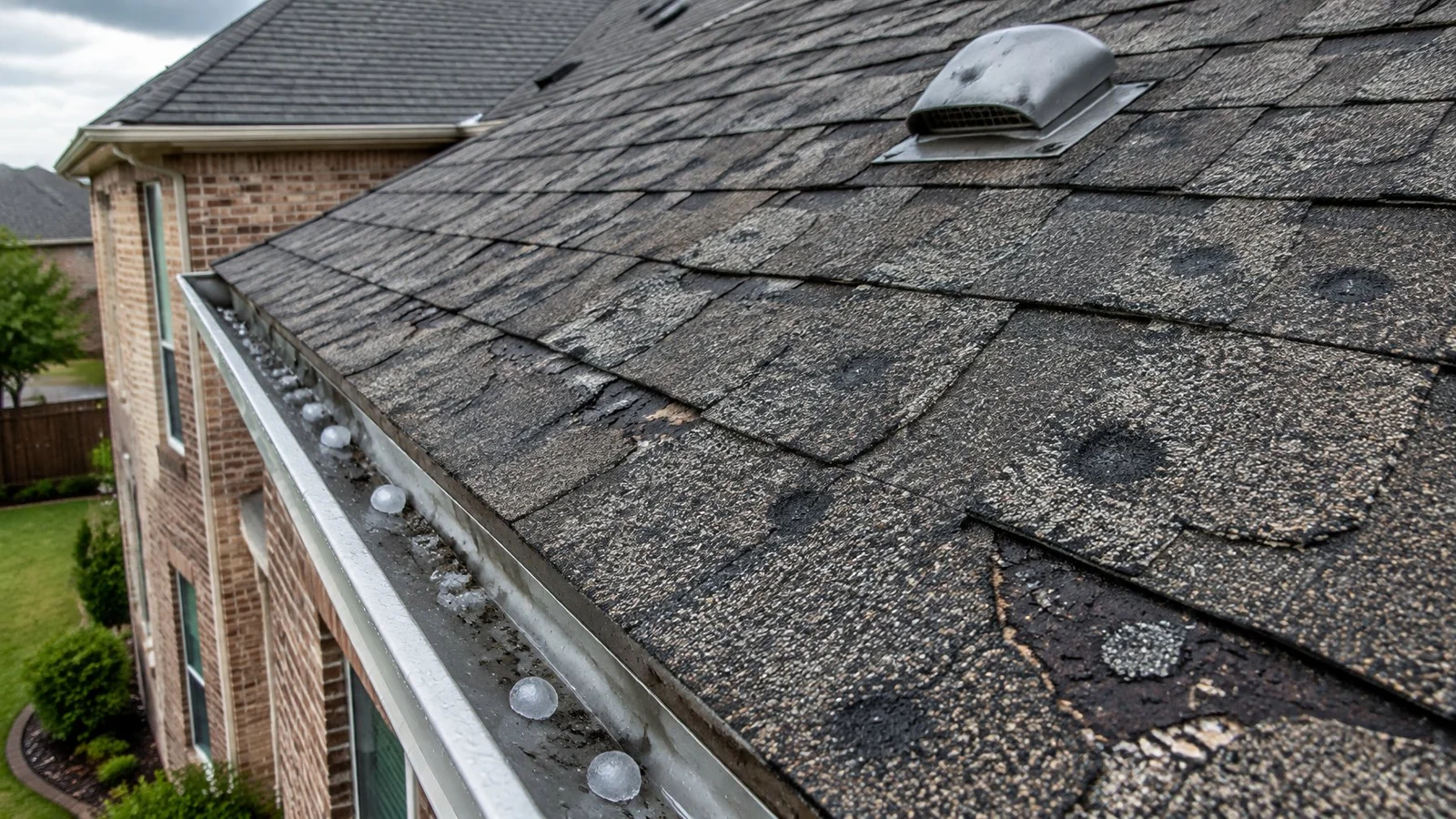
Frisco sits in the part of Texas where spring and early-summer thunderstorms routinely carry hail. Composition shingle roofs take the beating: bruised and cracked shingles, dented vents and flashing, and torn pipe boots that let rain through at the next storm. Wind-driven rain also finds its way around window frames, under garage doors and through gable vents into the attic.
Rainwater that has run over a roof or across the ground is treated as contaminated in restoration terms, so porous materials it soaked are usually removed rather than dried. The roof itself is a roofer's job, and your insurer will probably send an adjuster to look at the hail. The water inside, in the insulation, ceilings, walls and floors, is what the restoration contractor handles.
Right now
What to do first
- Stay out of water near outlets and panels, and don't go up on a wet roof. Tarping is a job for a roofer with the right gear.
- Put buckets under drips and poke a small hole in the lowest point of a bulging ceiling to let the water out in one place rather than letting the drywall fall.
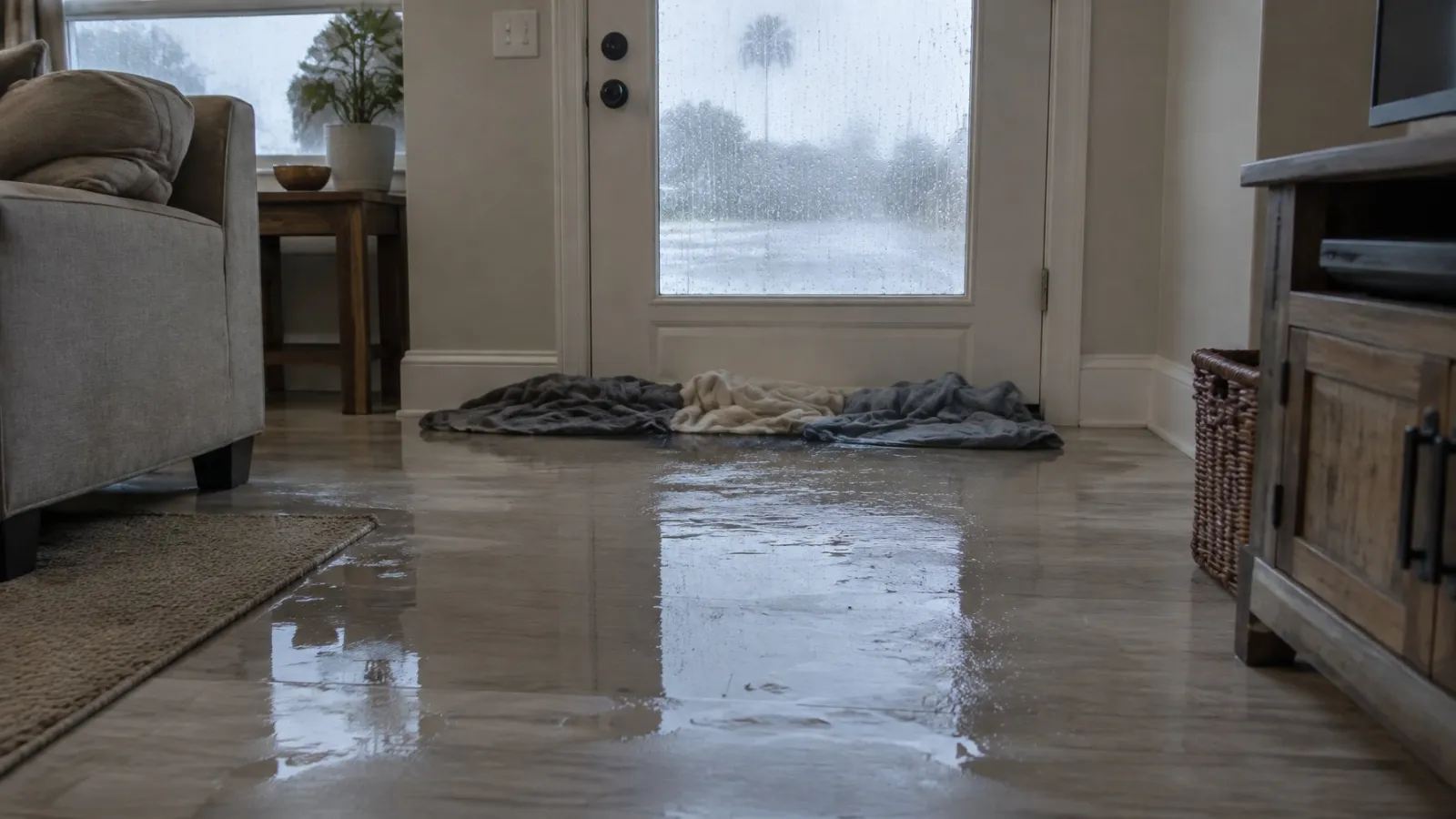
- Towels or a rolled rug at a leaking door or window; move belongings off the floor.
- Photograph the hail, the roof from the ground, the water and where it came in. Note the date and time of the storm.
- Call your insurer to open a claim, and be wary of door-to-door roofers who arrive before the hail has melted.
What storm water cleanup involves
What a restoration contractor should do, so you know what to expect and what to ask.
Safety and source
Sagging ceilings and electrical hazards are dealt with first. The roof is tarped or the entry point blocked by the right trade.
Attic insulation
Soaked blown-in insulation is removed so the ceiling joists and decking can dry. Wet insulation left in place keeps the ceiling wet for weeks.
Ceilings and walls
Water-stained ceiling drywall that stayed wet comes down; wall cavities around windows and doors are opened at the bottom and dried.
Floors and garages
Water that came under a garage door or across a slab is extracted and the flooring it reached is checked.
Cleaning
Surfaces touched by runoff are cleaned and treated before drying, because roof and ground water carry dirt and bacteria.
Fixing the cause
Roofers, window installers and garage-door companies deal with how the water got in. Restoration deals with the water.
How it works
From your call to a dry home
We don't run our own crews. When you call or send the form, we connect you with an independent local restoration company that serves your area. They inspect, give you the estimate and do the work.
- 1
Stop the water
Buckets, towels, and a roofer for a tarp if the roof is open.
- 2
Call or request a call back
We connect you with an independent restoration company that covers your address.
- 3
Clean up and dry
Wet insulation and drywall removed, surfaces cleaned, attic and structure dried.
- 4
Fix the cause
Roof, flashing, window or door repairs before the next storm.
Costs
What hail & storm water damage typically costs
| Job | Typical range | What moves the price |
|---|---|---|
| Roof leak, one ceiling and attic drying | $1,500 – $5,000 | Ceiling drywall, insulation, attic access |
| Wind-driven rain, one or two rooms | $1,000 – $3,500 | Flooring removed, wall cavities, contamination |
| Several rooms or garage flooding | $4,000 – $12,000+ | Area, materials removed, contents |
These are planning ranges for typical jobs, not quotes or surveyed local averages. The contractor prices your job after an inspection. Plumbing, roofing and rebuilding are usually extra.
Questions
Hail & Storm Water Damage: common questions
Does homeowners insurance cover hail and rain damage?
Rain that gets in through a roof or window the storm damaged is usually covered, often with a separate wind and hail deductible that is a percentage of the home's insured value. Water that rises from the ground or flows in from the street is flood, which standard policies exclude. Ask your insurer which applies.
Why remove drywall and insulation if it was only rainwater?
Rainwater that ran over a roof or the ground picks up dirt and bacteria, and insulation holds it like a sponge. Porous materials it soaked usually can't be dried reliably or cleaned, so they come out.
Should the roof be fixed before the drying starts?
The roof needs to be tarped or patched so the attic doesn't get wet again at the next storm, but drying doesn't have to wait for the full replacement. Most roofers can tarp within a day or two of a storm; the restoration contractor can start as soon as the water has stopped coming in.
Related
Other water damage help
Water Extraction
Standing water out quickly, before it soaks into the subfloor, the bottom of the walls and the cabinets.
Learn moreStructural Drying
Air movers and dehumidifiers, moisture readings every day, and a dry standard before anything is rebuilt.
Learn moreMold Remediation
Musty smell upstairs or spots after a leak? Contain it, remove it, fix the moisture, and use a TDLR-licensed remediator.
Learn moreAlso serving nearby towns
Besides Frisco itself, calls are taken from these neighboring towns.
Water damage right now?
Talk to a restoration contractor today
Call and you are connected to an independent restoration contractor who serves Frisco, Little Elm and Prosper. Or leave your number and they call you back.